What makes a good espresso blend: the story behind our Golden Gate
Three varietals, four countries — how Caturra, Catuai, and Typica combine into the Golden Gate Espresso Blend’s sweet, chocolatey profile.
Published
An espresso blend isn’t just a "mix of beans" — it’s a composition, built like a recipe, where each varietal brings something different to the cup.
Three varietals, four countries
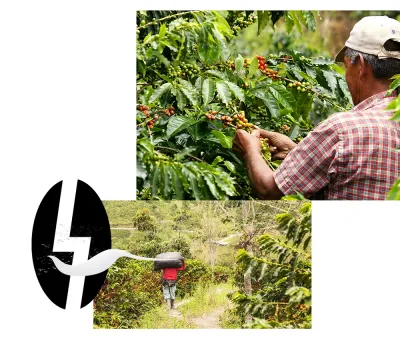
Our Golden Gate Espresso Blend combines Caturra, Catuai, and Typica from Brazil, Colombia, Guatemala, and Nicaragua, grown at 1,300–1,700m by small local farms.
Caturra: the Brazilian root
Widely grown across Central and South America, first discovered on an estate in Minas Gerais, Brazil, around a century ago.
Catuai: a deliberate cross
A genetic cross between two natural Arabica mutations — yellow Caturra and Mundo Novo — bred for resilience and consistent yield.
Typica: the founding varietal
Between the 15th and 16th centuries, Typica was among the first coffee seed stock to travel from southwestern Ethiopia to Yemen — the root from which Arabica’s whole later spread began.
What each one brings to the cup
The result is sweet and chocolatey, with a syrupy body, mild acidity, and an unexpected fruity finish of mango and tangerine — a balance a single origin alone rarely achieves.